


Importance Of Fundamental Analysis In Forex Trading
November 03, 2025Forex Fundamentals
The Three Pillars of Forex Fundamentals
To keep things organized, fundamental traders break down global news and data into three core categories:
1. Central Bank Policies
Central banks (like the US Federal Reserve or the European Central Bank) are the single biggest players in the Forex market. They control the money supply and set base interest rates. Traders obsess over central bank statements to gauge their tone:
Hawkish: The central bank is focused on fighting inflation, usually by raising interest rates. This is typically bullish (good) for the currency.
Dovish: The central bank is focused on stimulating economic growth, usually by lowering interest rates. This is typically bearish (bad) for the currency.
2. Economic Indicators
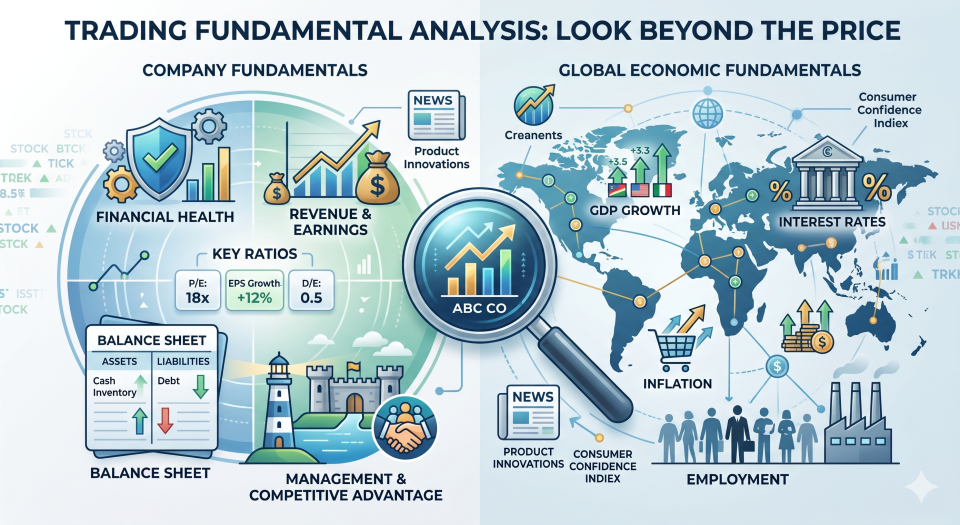
These are scheduled data releases that provide a snapshot of a country's economic health. Better-than-expected data generally strengthens a currency, while worse-than-expected data weakens it.
3. Geopolitical Events
Elections, trade wars, natural disasters, and global conflicts can cause sudden, massive shifts in currency values. For example, during times of global uncertainty, traders often pull money out of emerging markets and park it in "safe-haven" currencies like the US Dollar (USD), Swiss Franc (CHF), or Japanese Yen (JPY).
5 Essential Economic Indicators Every Trader Must Watch
You don't need a degree in economics to trade fundamentals, but you do need an economic calendar. Here are the top five indicators that consistently move the markets:
| Indicator | What It Measures | Typical Currency Impact |
| Interest Rates | The cost of borrowing money set by central banks. | Highest Impact. Higher rates attract foreign capital, strengthening the currency. |
| Gross Domestic Product (GDP) | The total value of all goods and services produced. | A growing GDP signals a strong economy, usually boosting the currency. |
| Non-Farm Payrolls (NFP) | US job creation (excluding farm, government, and non-profit workers). | Strong job growth leads to consumer spending, strengthening the USD. |
| Consumer Price Index (CPI) | The rate of inflation (how fast prices are rising). | High inflation often forces central banks to raise rates, which can boost the currency. |
| Trade Balance | The difference between a country's exports and imports. | A trade surplus (more exports) increases foreign demand for the local currency. |